
Routing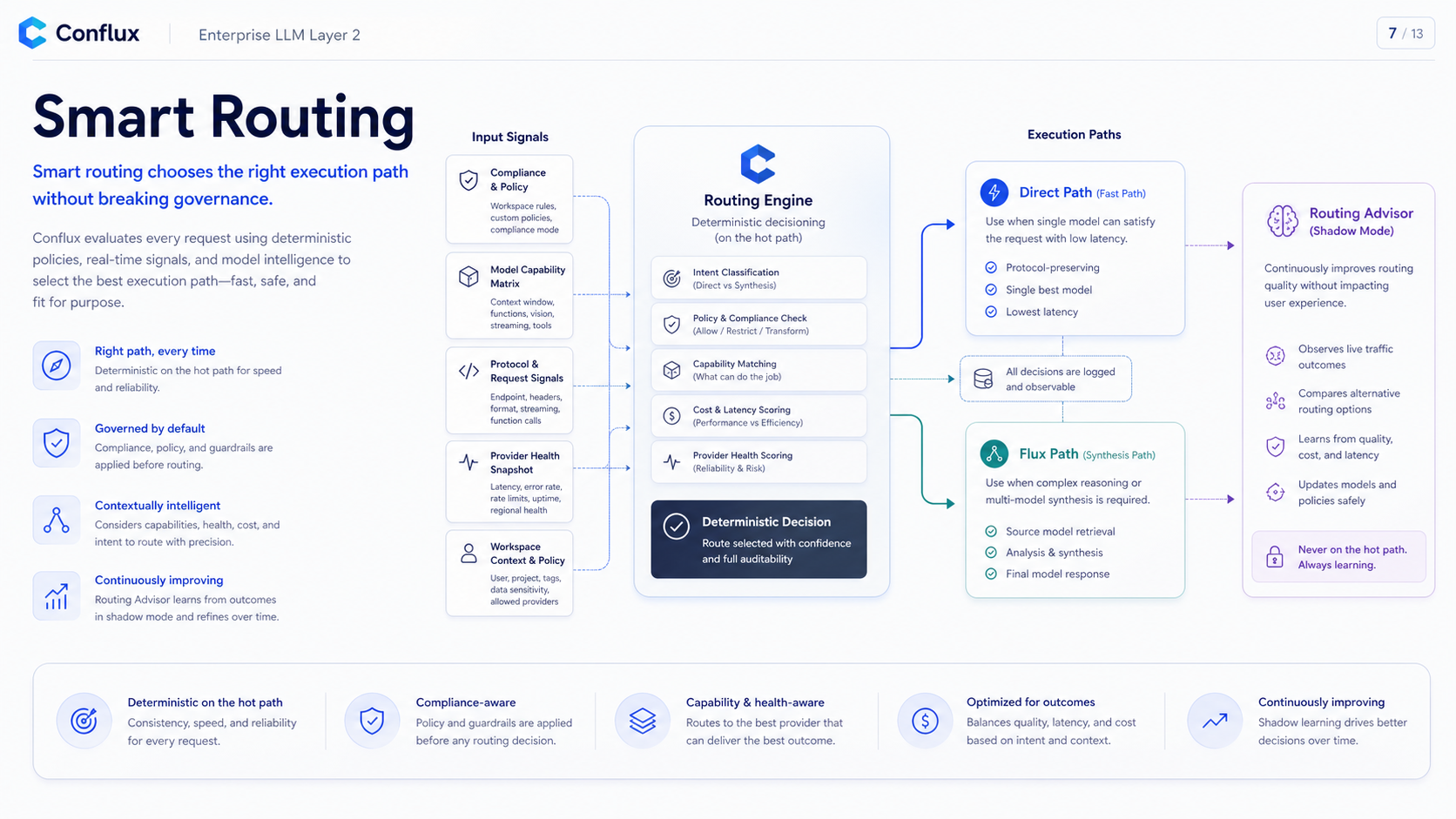 Click to enlarge
Data pipeline and router shadow
How Conflux collects safe learning signals before enforcing auto routing.
Click to enlargePurpose
Data Pipeline v0 and Auto Router v0 collect explainable request metadata before Conflux changes any live route. The first release classifies requests in shadow mode and stores metadata-only dataset examples for later compressor and router evaluation.
Shadow mode
Dataset rows
PromptDatasetExample rows are metadata-only by default. They store hashes, counts, feature JSON, label JSON, eligibility status, and redaction metadata.
ROUTER_SHADOW
source: auto-router-shadow
label: category, tier, confidence, reason codes

COMPRESSOR_REDUCTION
source: prompt-optimizer
label: changed, saved chars, reducer ids
Safety contract
The v0 pipeline does not store raw prompts, latest user prompts, provider payloads, or optimized prompt bodies as training examples. Raw-text teacher labeling requires explicit workspace opt-in, redaction, retention rules, and review before it can feed a model.